So, you’re thinking about Harrison’s Cave. Good. It’s impressive. But it isn’t the only story the limestone here has to tell.
Barbados is porous. A sponge of rock riddled with gullies and holes. Most are just cracks in the earth, but a few others are worth your time. They are not like Harrison’s. Not at all.
Animal Flower Cave

Go north. All the way to the top of the island, St. Lucy, where the land gives up and falls into the sea. This is the Atlantic side—it’s not gentle.
Check Lunch At Animal Flower Cave with Scenic Drive (Pickup offered) on Viator.
The Animal Flower Cave is the only accessible sea cave in Barbados. That’s its claim to fame. It’s a series of chambers carved out by the ocean, with massive, jagged openings that look out onto the water. The sound of waves is constant; it gets in your bones. The name comes from the sea anemones living in the rock pools inside. They’re strange little things—when they open, they look like flowers. When they close, they’re just fleshy knobs. Kids like them.

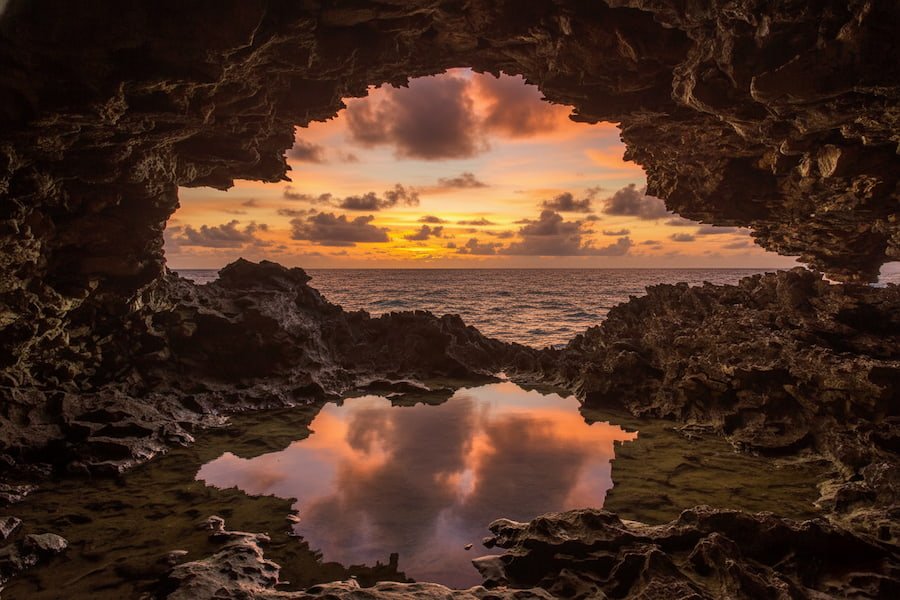
On a calm day, you can swim in one of the deeper rock pools. A natural swimming pool with a billion-dollar view. On a rough day, you stay out of the water. Period. The floor is old coral, smoothed down over who knows how long. It’s slippery.
The light inside is something else. It bounces off the water and paints the walls. The rock is oxidized in places—greens from copper, reddish browns from iron. People say they see shapes. I don’t know.
There’s a restaurant on the cliff above. Decent food. The view is the main reason you’re there. For photographers, this place is a layup. It’s hard to take a bad picture.
Coles Cave
This one is different. Totally different.
Forget the lights, the paved paths, the tour guides with their practiced jokes. Coles Cave is a wild, wet hole in the ground in the parish of St. Andrew. There are no signs. No visitor center. You need a guide—a real one who knows what they’re doing—or you shouldn’t even try.
Getting to it involves a scramble down into a gully. Sometimes there are ropes. You will get wet. An underground river flows through the whole system, and in some places, you’ll be wading through knee-deep water in total darkness, except for your headlamp.
This is actual spelunking.
The formations are there: stalactites, stalagmites, flowstone. But they aren’t spotlit for your convenience. They’re just there, covered in a thin layer of mud, existing in the dark as they have for thousands of years. It’s an authentic experience, if you’re into that sort of thing. Some say it’s connected to the Harrison’s Cave system—a kind of raw, undeveloped cousin. It feels like it. It’s for adventurers, not tourists.
Welchman Hall Gully Cave

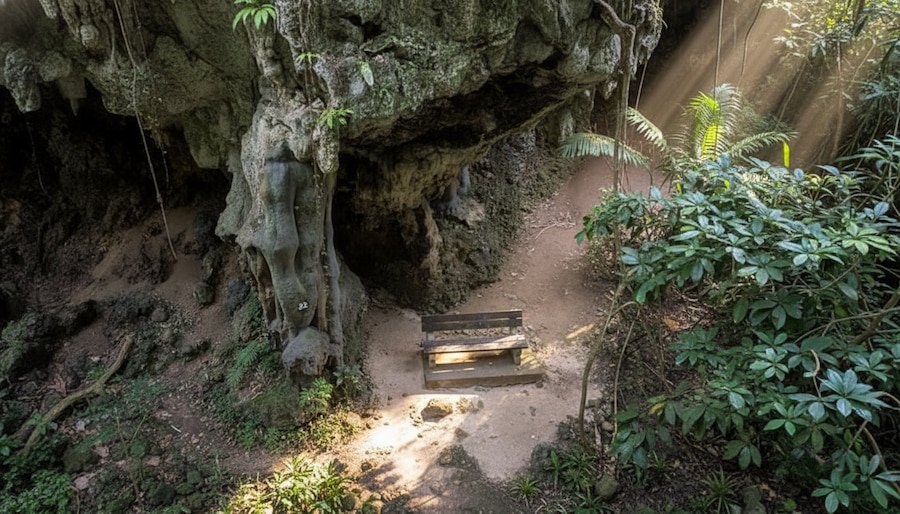
Located in St. Thomas, right near Harrison’s, actually. This isn’t really a cave anymore; it’s the ghost of one.
Thousands of years ago, the roof of a massive cave system collapsed, creating a deep, long trench. That’s the gully. Today, it’s managed by the Barbados National Trust as a nature preserve. You walk along a paved path at the bottom of what used to be a cavern, with towering walls of limestone on either side. It’s quiet down there. Shaded. Cool.
You can still see the old cave formations stuck to the cliffs—stalactites dripping down, thick columns of flowstone frozen in place. It’s geology, but it’s also a garden. The place is filled with tropical plants: giant bamboo, clove trees, palms of all sorts.
Wait, I should explain the main draw. Monkeys.
A troop of Barbados Green Monkeys has made the gully their home. They come down for a feeding every morning—I think it’s around 10:30, but you should probably check. It’s the most reliable place on the island to see them up close.
So this isn’t an underground adventure. It’s a walk. A peaceful, green walk through the ruins of a cave. Good for people who prefer plants and animals to tight spaces.